Showing posts with label Step3. Show all posts

A Regret List will help you avoid them

Once we've learn to accept that mistakes are inevitable, we can get on with the business of avoiding them. The sooner the better.
In fact, you can even do one better: Regret your mistakes even before you do them. This concept comes from a little known Asian proverb which translates roughly as "to regret before doing is wise,  to regret after is futile."
So how do you regret your mistakes before you do them?
This is an exercise that can be done as part of Step5 or even Step3 and Step4. It is best done in a group because it benefits from a deep pool of experience. There will be reservations when done within this setting as trust will be a core issue. Exercise your judgment on this. Doing it alone may require you to do some soul searching as well as analysis.
Begin by putting everybody into the mindset of having solved the problem. Restate the problem as in Step2 as having solved them and addressed the primary goals. Think happy thoughts. Then ask everyone of what they would have done differently or done better.  You can also start with statements like "I wish I hadn't forgot to...".  It may be awkward for some people but ask them to think of it like going through a list of things they would have normally done after closing the door of the apartment or house as they were leaving it.  This when we would try to think whether we forgot something or left something behind before we go too far.

Doing something bad: using Tabletop Excercise as a learning tool

We may come across the need to do something bad. Sometimes it helps to repeat our failed attempts at solving a problem. There are two likely reasons to do this. The first is to learn from our mistakes. If we can repeat safely what we did previously that didn't work, we can pinpoint what things didn't work or went wrong.
The second reason to do something we know doesn't work is to make notes on what did work and what has to be done in any solution that we choose. In another article, where I talked about how we need to learn something new when we want to do something new, I also pointed out that by finding a way to redo past processes, it becomes easier to execute a new process. Knowing what steps to repeat or things that have to be done because it affects other people, can ease us into a new process. How? It eliminates the concern that we missed something. We get to rid that feeling that we missed something.
The real problem is how can we repeat something that didn't work without making a bigger problem?

One way is use a tabletop exercise. Tabletop exercises is a favorite tool of emergency response services. First, it's cheaper than trying to replicate a full-blown catastrophe. Second, it provides a way for the leaders of organizations that have different functions and responsibilities to work together while still being responsible and in control of their own organizations.
Before we get ahead of ourselves, let's get the basics of a tabletop exercise right.
The tabletop exercise is run by a facilitator. In the context of problem solving, this is either us or the person who knows the problem. The role of the facilitator is run the exercise or scenario. We'll get to that in detail shortly. The players are other member your team or other people who are solving the problem together with you. The players will interact with each other and the facilitator as the facilitator brings the group of players through the scenarios of the problem.
It's also very useful to have an observer. This person or group is someone who is familiar with the situation or technology or mechanics of the problem but not necessarily part of your team or responsible to solve the problem. Their role is to provide an outside perspective. Observers take note of their concerns or questions but don't participate initially. Once the facilitator finishes with the scenario, the observers can ask questions and present their thoughts and ideas. The observer's role is not just to criticize but offer suggestions that the players may not have thought of during the exercise.

Overcoming the fear of Change rationally

The only constant is change. Or so we remind ourselves so often. Why? Because like it or not, at one time or the other, we all have feared change. Change is the unknown and we have a tendency to fear what we do not know. In Step5, we deal with change itself. This is simply because the solution we choose to solve our problem will undoubtedly bring out change.
I've talked about before that in order to start changing, we must first accept change. Accepting change allows us to face change without the mental weights of thinking how to resist change and finding ways to keep the status quo. I've also mentioned that sometimes we should overcome fear of change by simply being impulsive.
But let's say we learned something new but are hesitant to apply what we learned. It's there but not put to use. Like a tool that we bought but still in the packaging. The reason for this hesitation is because it is a form of fear of change. Specifically, we are unsure whether that new thing we learned is better than we already know. We wonder whether it will produce better results that what we normally do.
One way to overcome this fear is to go over the previous unsuccessful attempt. By repeating steps we've taken before, we can be sure not to miss anything. Another way is to overcome it rationally. First, we rationalize how we got to this point. Either what we were doing before wasn't working or the results we were producing wasn't good enough. So that establishes that what we need to do is something else. It's likely that we had tried what we knew but even those efforts weren't successful. So, when we exhaust what we know, all that is left if to try something new.
Second, let's rationalize the change itself by ensuring that the change is not really a total change, that we are not changing for change's sake. In fact, the best change we can do is to build on our experiences. One of the main concerns about doing something new is failing to achieve what did work before. There are two ways we can make sure when we try something new, we achieve at least some success. First, we must know what success looks like. We need to list down what that something new must achieve. We must define the goals so that whatever new things we do, it's headed in the right direction.
Second, we must also list what needs to be done other than the main goals. Even though what we did before didn't work out, it probably still did some things that were necessary. Like reports that needed to be generated along the way or measurements that needed to be taken for quality purposes. Sometimes, our previous efforts did something that was required for something else to work or necessary for another group's success. By running through what we did before and taking note of the necessary steps or things we need to produce along the way, we are ensuring the change we are achieving by doing something new still hit key targets along the way.

Getting the Right Answer Needs the Right Question Part 2

Continued fromGetting the Right Answer Needs the Right Question... Part 1.


On the other end of the scale is under-thinking or not thinking about the question at all. Under-thinking will also give us the wrong question. The tendency is to not think at all and ask the questions we normally ask. We ask these questions not because of any specific reason. We ask them on autopilot and we have an expectation of the answer. Sometimes, it is a force of habit. We are just used to using these questions in that particular situation. This short-hand can be useful as a starting point but again the same principle applies, think whether will the question being asked give us the answer we need. We need to think about the question, the answers it may give and whether those answers are the ones we are looking for.
Using the questions that are normally used or automatically asked have a tendency to yield roughly the same answer. If the answers given haven't provided us with a good solution, perhaps it's time to ask different questions. There are several techniques that we can use as a starting point to re-approach a question
  • Change the focus of the question. If the question is general, make it more specific. If the question is more specific, make the question more general. For example, rather than asking what we tool we need, refocus on the more general goal of the purpose of the tool. Ask how can we do the job better or how can we do the job without the tool. If the question focused on the more general goal of achieving success, refocus on how to reach specific goals that define the success. 
  • Change the context. If the question is narrow, make the new question cover a wider area and areas that are noramlly off-limits to the question. Rather than trying to solve just that one part of the problem, ask the questions that will solve several pieces at the same time. Sometimes, the solution or at least a part of it, lies with other people. Another method is to remove information or change perspective of the question. Instead of asking how the task is supposed to executed, ask how should the task be executed.
  • Flip it / work backwards. Normally, we define the solution criteria and ask what would yield them or what would fit. Try reversing the process and look at the possibilities available and how each of them would fit as a solution. Rather than trying to come out with something new or something ideal, use the options available to us at that time and situation. The options can be evaluated individually and in combination. This is very useful when there is little time and few resources. By doing it this way, we can be open to other solutions that we normally wouldn't be thinking about.

Getting the Right Answer Needs the Right Question

Ask the question that will give you the answer you need. Simple, right? Why ask questions that don't give us  the answer. Common sense? Maybe. That statement wouldn't be necessary if we actually asked the questions that will give us the answers that we need. We don't pay enough attention to the questions being asked.  We need to think about the questions to be asked when solving problems.We need to spend some time on working out the questions that need to be asked.
There is a tendency to over-think it or to not think about it at all. The result is the same: The wrong question gets asked. The key thing to focus on is: are the questions going to give the answers that we are looking for?
Over-thinking a question will result in a question that will be formulated incorrectly. For example, do we ask the shop keeper how much sugar we need for the week? Why shouldn't we? They know more about sugar than us. We know that we should ask the people who know more about something than us to get a useful answer.
But it isn't about sugar, isn't it? The question is really about us or to be more exact, how much sugar we need. So the correct person to ask is ourselves. Think about how much sugar we have been using. We should ask ourselves when was the last time we bought sugar and how much. That will give us an estimate of how much sugar we will need for the week and how much to buy. We should also plan ahead and ask ourselves whether we will need more sugar than usual in the coming week.
The problem with the original approach was that we applied a concept that we know incorrectly. We wrongly applied something we know. We know that people who know more about something than us can give us the answer. Only we wanted to know more about us than about sugar. The store-keeper doesn't know how much sugar we need. They know how much sugar they have. Most likely, they will ask us questions. Based on our answers, they can give suggestions. In both of the correct approaches, we are giving the answers because the issue is about us, not about sugar.

Knowing when to walk away

When solving a problem we can get caught up in the moment. Sometimes the choices that we are aware of are not the only choices available to us. They may seems so because of what other people around us tell us. It could also be the only thing we can think of in that moment. Looking at the seconds ticking away on the clock only increases the pressure on us. Like the walls are coming in on us.
It is times like that this that walking away, just for a while, can be useful. We are not walking away from the problem. We are looking for space and time to think or in a way, not think. Time away from environment of the problem can offer new perspectives. During that time away, our focus is on something else. The brain is a wonderful thing. Even as we are focusing on other things, it is still processing experience and input that we have just had. While we go to get a drink or take in fresh air, it is still building links and associations. Think of it as our brain is subconsciously working on the problem.
When time is of the essence, a good way to get a fresh perspective and possibly change ours, is to find someone who has little specific knowledge on the problem we are facing but some general information on the subject matter related to the problem. They know something about the subject but may not be specifically about our problem. Begin by explaining to them the problem. They will have a lot of questions but that is the point. Their questions will not only make things more clear to them but also to you. They will provide an outside-looking-in second set of eyes to our problem. They will likely ask questions you may have never thought of. They may find options not yet visible us. Or their questions may sound silly but answering them will either eliminate options to you or maybe hint at different way of thinking about the problem. The very least is that interacting with them give us time for mind to focus on something else so that when we do look back we have slightly different perspective.
This process is moving us from Step3, coming out with possible solutions or Step4, choosing the best option back to Step2, describing the problem. It is still counts as a step forward because are become that much closer to a solution.

Timeliness of it all Part 2

Continued from Part1.
Once we have determined the goals of the solution (Step2), we can start looking at possible solutions (Step3).  Then we choose the solution to do in Step4. One way to do so is to set the criteria for the right solution. The criteria for the right solution may be as important as the solution itself because we are expressing both the goals of the problems and the limitations that we have to take into consideration. One of the most important limits is time, specifically execution time.
A solution that is complete but takes too long may not be the right choice. Think of it this way: Although we can test all the wires to be sure, the bomb may go off by the time we do so. Maybe our problem is not a time-bomb but when considering the factor of time, it works the same way. We want a solution that not only works but works at the right time.
This leads to the question of a compromise on completeness or quality. We may need to sacrifice either or both to meet time limit. It just may be the best choice. However, the adage "There is no time to do it right the first time, but there is always time to come back and fix it again and again" should also be heeded. Consider breaking the solution into two parts. The first part is to meet that deadline. The second is to make the solution complete. We solve the problem partially to avoid other problems if we wait too long but we don't stop until the entire problem is solved.
The reality of it is that some people would view this as wasteful. Why bother with the second part if the first part already fixes the problem? It is important to try to communicate that the first part did not solve the problem but merely delayed the problem from becoming worse sooner. Or that the first part of the solution will itself fail soon. Or simply call the first part not solving the problem. Often at this juncture, there are very stubborn parties that would do anything to stop it there. For them, let's meet their stubbornness by refusing to acknowledge the problem was solved.

Consensus is not a key part of a solution

It does sound counter-intuitive.
However, if you are working in a group, a consensus is not required to solve a problem. It simply is true, not everyone needs to agree on a solution for a problem for it to be solved. In fact, the opposite is true. In coming out with a compromise solution, a solution that everyone can agree on, that solution may not solve the problem in it's entirety. Think of where it came from. A solution that was compromised.
There is this challenge facing teams and groups working to solve a problem every where. The question they wrangle with is: how important is an agreement between all members of the team to solving the problem. The answer will vary from problem to problem. Most groups come to the immediate conclusion that a consensus is very important and often the most important thing. Some groups consider achieving the solution's objectives is more important than a consensus.
But the answer's contribution towards the solution is far less important than most people think. What is more important to a successful solution is ownership of the problem. Owning the problem means taking responsibility to define a problem, lead in the quest for a solution and steer the effort to make the solution a reality. Too many problems get bogged down in the quest to reach a consensus. Time is lost and solutions may not be timely. There can be always a difference of opinion no matter how small. Too much time can be spent on trying to reach a common ground.
What every problem needs is a leader taking charge and solving the problem  There is the key word. Leadership. Even when the problem is faced by a group, a leader must emerge to solve the problem or will emerge by the time the solution is finished. Every group will have people who follow and those who lead or at least want to. A leader here is not one person per se but could also be different people at different stages or according to their capabilities. The leader will be defined not only their ascendancy but also by the followers who choose them. Members of a group must be ready to take on the challenge of leadership and the challenge of being a contributing team member. The scope of how to become that leader is beyond the scope of this post and will be touched on in the future. But it's worth noting that the first step that a leader should take is acknowledge the members of his team and the roles they play.
By refocusing your energy on either taking charge or following and working with the leader, it will ensure the effort to solve the problem keeps moving forward towards the solution.

The Need to Ask Stupid Questions

We have all heard the phrase "there are no stupid questions". Why do people say that? More importantly when do we most likely hear someone say that? The answer to the second question is simple. People say "there is no stupid questions" during meetings when trying to get the audience to ask questions.  They also say that in group discussions when they are trying to break people's conceptions of the "stupid" and "smart" questions. Both want for it to lead to a discussion on ideas and get people to be creative. Which leads to the other often used phrase, "There are no stupid ideas".
But that is for another time. Let's look at how you can harness this to find possible solutions for your problem. This is done usually at Step3. You have admitted to having a problem and committed to finding a solution. You know what your problem is and what the goal of the solution is because you have told the group or someone else about it. Now it's time for ideas. And often you just don't have any. This is where the phrase "there are no stupid questions" comes in.
There are several ways to look at stupid questions and how they can help you find solutions. You can also use it to discount options or possible solutions to the problem later down the stage. Here are some uses for using or asking "stupid questions":

  • First - You have to ask the stupid question to get at the smart answer. Stupid questions are correctly answered by smart answers. If people give you stupid answers, don't worry because it only shows their ignorance and you know where those people stand on solving the problem. Getting a smartypants answer will also only reflect on that person, so don't get upset and move on. Keep looking for the smart answer because it is the right one. It could be the answer that everybody claims to know but reluctant to say out loud. And in a group setting, that may not be clear to everyone especially those that simply don't know. So having the smart answer being said ensures everybody understands why the question is thought of as a stupid one. Don't be surprised to find that people sometimes don't have the right answer as to the why part. 
  • Second - Stupid questions generate communication. The ability to answer a stupid question gives you an insight into that person's thinking, even if it is your own. For starters, refer to what was mentioned above about how the type of answers reflects the person answering. Secondly, an incorrect answer to a stupid question may expose a gap in understanding of the question and possibly, the problem. This would help you identify people with this different understanding. Try to understand their point of view by discussing it with them. It could just be that they are approaching the problem from another angle and from their perspective, their answers are correct. Make your case by providing clear and simple arguments to them, asking them to see things from your point of view.

Use Bad Ideas to Reach Good Ideas

When brainstorming for possible solutions, it does seems cliched to say "There is no such thing as a bad idea" or "There is no such thing as a stupid question". In both cases, it's how the idea is used or the question is answered that will determine whether some use will come out of them. You have to take the attitude that both can offer something towards solving your problem. If you are working with a group, the way to deal with latter is to have the question answered by someone who doesn't think it is a stupid question. If there is a consensus that the question is "stupid", it should be answered anyway with the person answering clarifying why they think so. Questions that have answers may lead to more questions, which spreads out the knowledge and information. Don't be surprised to find conflicting opinions when people clarify. People may disagree why a question is "stupid". Harness this to explore new ways at looking the problem. Use the difference of opinions to come out with new ones and maybe a different understanding of the problem.
There are also many uses for "bad ideas". Here are a few to start

  • Use the idea as starting point. Explain why the idea is stupid (even to yourself on paper) and then look at the opposite of those opinions.
  • Break an idea-block by using the idea and exploring it's possibilities. If it is the only idea you can come up with and you think it is a bad one, then there are probably similar ideas which may not be as bad. Continue finding ideas that are less "bad" using those similar ideas.
  • Break a deadlock between factions in a group. If the idea is something both sides can agree is not a good idea, then a common ground is created for cooperation. Work towards making sure the "bad" idea is not realized. Make the "bad" idea, the "villain" that all the factions must defeat
  • Use it as a club or disincentive. If the "bad" idea is the only one available, consider using it if no other way or a compromise is found. Consider that the only possible outcome and offer it if no alternative is found. Make the "bad" idea the Solomon decision. Don't be surprised if new ideas suddenly crop up
  • Use the idea to define the edges of reason. Create a boundary of where a discussion shouldn't go using that bad idea. But don't totally reject. Use them in the ways listed above.

Change Blindness: the cost of focus

Solving a problem requires focus. Nobody is doubting that. We need to focus on the problem. We need to focus on the solution. When using the 5 Steps, we need to focus also on possible solutions and their implications. Focus, focus and focus. But what is it that we are missing when we focus. The act of focusing means we discard what is not important and keep and eye on what matters to us. Information that we are not focusing on is ignored.
But what is the cost of focus? One of the assumptions that we unconsciously make when focusing is that what we are focusing on does not change. Everything remain still as we zoom in. We also assume that what we are not focusing on does not change also. It is like when focus on an picture. Unfortunately, unless you are dealing with a picture, most things change as we are working. Focusing our vision is a very fast process. That is why it seems as nothing has changed. But when we focus something else, like our thoughts, things at the beginning may not be the same when we stop focusing on them. At the end of focusing, we do not expect changes to happen. Our fixation can be so strong that we are not surprised at things that changed because we didn't notice them in the first place. When we focus too much, we miss change.
There is a famous example to demonstrate this phenomena. It involves a guy in a gorilla suit. This phenomena even has a name, "The Invisible Gorilla Effect". It is the subject of the book of the same name. Check out these videos from the book's site that demonstrate the effect. Participate in the experiments. How surprised were you at the results? In short, about half of us are prone to this effect. If you think about the amount of things we focus on every day, about half of the time we would miss something that changes as we are focusing on it. This article goes into more details on the phenomena.
There are several strategies to combat this. One is through variation. Having more than one person looking at something gives it more attention. The other person would notice changes that one person would miss. Exchanging information afterwards would also result in more changes being noticed or at least hinted at.
Another way to deal with this phenomena is to break our focus. Decide to stop focusing after doing it for some time. Be wary of too much focus. Stop thinking about it and reset our focus. A bit of time may be needed to make us forget the details. The amount of time needed depends on our memory and our ability to discard the past experience or memory. When we come back and look at it again, it's a clear and fresh outlook. Sleep is a good solution. A nap relaxes the brain and you wake up with a fresh perspective. I re-edit my posts after some time because I re-read, after a while, what I write and catch my mistakes.

Solving Problems Means Taking a Break

Often a complex problem can get you down. If you are solving this as a team, it'll probably get most of you down. So what can you do when you realize you are in a room with people who realize they are looking at doom in the face? Absolutely nothing. This is probably the best time to take a break. How long depends on the time you have left. You are tired, stressed and running out of ideas. It is time to step back and take a break. Either go out, take a walk or get something to eat. Talk about something else other than the problem or work.
Contrary to what people think, if we care about something enough, the brain will continue to think about it even though we do something else. It has been proven that mundane tasks or repetitive actions can ease the pressure on oneself to solve a problem. Basically, you are focusing on something less stressful. Less stress frees up the brain to actually solving the problem. That is why some people pace the room. The act of repetitive walking up and down moves the immediate focus of the brain away from the problem directly and on the physical act itself.
So, do something physical or menial or repetitive but calming. A very smart group leader I knew a long time ago, would stop and take a few minutes to sweep the room or clean up when he was stuck on solving a problem. He would suddenly get up and start sweeping the room, regardless of what else was happening or what time it was. It was not uncommon to see him doing menial work or cleaning up way into the early hours in the day.  He would come back into meetings with new ideas. Often he found new ways to motivate his team to find a solution.
Another way the brain continues working on the problem while you do these other tasks is processing new information. Depending on who you are, the brain will take different amounts of time to process the information it has. Now you add newly acquired information that you got while when you were thinking of ways to solve the problem. The amount of information now has increased.
But the brain is always processing information. The way it processes information is by building pathways within itself. Think of information it has acquired or the things your remember or something you learned, as points. The brain is always building links between these points. It may look like solid gray matter from the pictures but what it looks like under a microscope is closer to a web. That is why Step2 is very important. By describing the problem, you are effectively training the brain on how to process the information regarding the problem. You are giving it hints on how to build those links. The brain will create new connections based on this structured information. That could be why some people can't even finish Step2 before a solution dawns to them.
The best way to do that is to describe it to someone. Even if that other person is yourself.

Problem with Problems 2

First a recap of the previous post: A strategy approach is a method of planning thats useful when you don't know where to start. Basically it is an approach based on rules. These rules don't necessarily give you the answer but provide stepping stones on which your solution or the journey to your solution will rest on. You have to determine how you will address the problem (or pieces of it) before solving them. One key question to answer is "Do you solve it all together or do you pick away at each problem one by one?"
To answer this question, you need to take a good hard look at the problem or problems. If you can, break a problem into smaller pieces. Do this regardless of whether you want to solve it as a whole or piecemeal. Identify dependencies between each piece or problems. A dependency is when one problem can only be solved if another problem is also solved. Another way to look at this is that one problem's solution helps to solve another. A dependency usually has a 'direction', from problem A, whose solution helps solve problem B. If a problem is complex enough, there will be quite a a number of them. Knowing the dependencies will help you figure out whether you want to continue a divide and conquer approach or whether you want to solve it as one problem or in one go. This determination depends on many factors, mainly the amount of resources available to you, the time available to solve the problem and the level of your skill required to solve the problem.
If you choose to solve a problem piece by piece, focus on the dependencies at the beginning or in the planning stage. Prioritize the dependencies according to a criteria you set. If you are leading a group of people solving the problem, communicate the criteria to your team. So, when the situation changes and new dependencies are introduced, your team can quickly re-prioritize and re-focus. The more complex a problem, the longer the solution will be. Even where is the 'stroke of genius' solution, a solution that solves the problem much more quickly than anticipated, spend the extra time gained going over the dependencies to ensure they are addressed or solved. Overlooked dependencies could cause future problems or change the solution into another problem.


Outlining Basics: Building Your First Outline

A tool I find useful in sorting out ideas and information is an outline. This is the same outline I was taught in Undergraduate English but given a slight twist. I will first cover the basics, elaborate on the components of an outline and give a simple example.
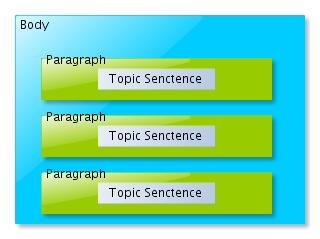
The first thing to understand about an outline is that it has a structure. It has structures on multiple levels. The first is the topmost or highest level. At this level an outline consists of 3 components.


  1. An Introduction - Normally introduces the reader to the document. Provides a basic description of the purpose and goals of the rest of the outline.
  2. A Body - Where all the main information is located, sorted and presented. In a paper or article it consists of paragraphs where each paragraph is centered around an idea or information or a collection of them.
  3. A Closing / Ending - This summarizes the document. It should re-state to a degree the purpose of the document and it's goals and how the document has achieved that. If the document is long, it should also summarize or restate key points.
The main area is of course, the body. This is the next level. The body consists of points. A point is a sentence that should state the idea in it's most simplest, straight-forward form. It can also summarize or state the topic of the information that will be elaborated on later. The elaboration can be done in the final paragraph or in sub-points. This means that points can be hierarchical or that a point can have sub-points. This is yet another level. These sub-points are points themselves and can have sub-points too. And so on and so forth.
Take a look at this simple example

  1. Introduction - Why my car won't start
  2. Body
    1. Symptom
      1. Turn the key and there is only a click-click-click sound
    2. Likley causes
      1. Battery is dead
      2. Problem with starter
  3. Closing - I need to narrow down the cause before going to the mechanic

Item '2.1 Symptom' is the topic while Item 2.1.1 is the elaboration. The sentence in item '2.2.1 Battery is dead' states the idea very simply and is a sub-point to item '2.2 Likely Causes'. Normally, there is no need to state item '2. Body' but I put it there as an guide.

When writing, these points will become a topic sentence. A paragraph is built around the topic sentence. As was pointed out earlier, the paragraphs will form the body. 

Teaming Up To Win 2

Continued from Teaming Up To Win.
A sports team has a very clear structure. Each team member knows what they have do. Each of them have both specific and general tasks. General tasks are jobs that are common to all members. Like to stop the members of the other team from crossing the field in football. At the same time they each can have specific tasks. A team member has to block a specific guy or run the interception pattern. All of these actions together form teamwork.
A sign of a winning team is when these tasks are clearly defined by the Coach. A good Team Captain knows not only his tasks but also those of all his team members. This information is crucial if he has to call an audible or make changes on the field to respond to some thing he sees happening in the game.
Each team member doing their job well is half the job done. What makes the whole more than the sum of its parts is how each member interacts and communicates with each other. Both of these are reliant on each other.

Getting Personal

Personal problems are the hardest kind of problems to solve alone. Personal problems are not just the private, non-work kind but can also be work problems taken personally. Work-related problems involving personality clashes other co-workers can also be taken as a personal problem.
Personal problem are hard because they tend to cloud our our judgment. Things we would normally see become obscure or even hidden. We can think we have ran out of options. Personal problems also change the way we act or behave. What we usually avoid doing suddenly becomes an option, sometimes the first option. Even the degree of what we do changes, taking our action too far or not far enough. All this makes Step 2 and Step 3 hard to do.
But there are ways to make dealing with personal problems easier.

  1. Get help. If you cannot see, some else can. To not seek help when it is available is not wise. Asking for help is offering to trust. Make Step 1 to be a declaration of "I have a personal problem and I need help".
  2. Write it down. When no help is near or you find it hard to trust, writing can be an equal substitute. By putting down your problem on something, you are starting on Step 2. Continue this by reading it back what you've written to yourself. Follow Step 2 and complete the description of your problem.
  3. Give yourself some distance between yourself and the problem. If you have the time, put what you wrote away for a while, like a day. Go and do something that normally makes you happy. Something simple like taking a walk, reading a book, having an ice cream or watching cats playing the piano.. Take a nap. When you feel refreshed, read back what you wrote. Or think about what you said when you asked help. If it helps, try talking it out a bit more. Imagine your are reading a problem someone else sent you. What advice do you have for yourself? Are you ready for Step 3?
  4.  If you think you are not ready, try to get help to start Step 3. Or you perhaps you want to take things slowly. Check yourself up. How are you feeling? If you are angry or upset, perhaps you should do something else. Or just let it all out. Either way is better than staying put. Personal problems can be very draining. Sometimes we can feel that we have given until we have left nothing to give. We can feel like we are drowning in the sea of despair. Just don't loose the one thing we need to stay afloat, hope.
  5. Stop making it personal. Ask yourself, how can I make this not personal to me? Is it really personal or am I just adding that dimension myself. Exercise your powers of rationality. Look from outside the box.
Personal problem can rob us of our judgement and objectivity. Yet we face them every day in many forms. That means that personal problems can only rob us of our wisdom and clarity of thought only when we allow them to do so. 

Take A Few Steps Back

You are stuck. You went through Step1 to Step3 and can't seem to find the solution that meets your criteria to solve the problem. Or you might have gotten to Step5 but you are finding the solution harder to do than you expected. You are having serious doubts about the 5 Steps. If you are depressed, you could also have serious doubts about your abilities and the situation you are in.
What advice do you give someone who is lost? "Re-trace your steps". Find the last junction you took. Go back some ways to the first junction you find. Look at your options. You know where you came from. You know where you got lost. How many other choices do you have? You should have at least one. Take it. Make note of where you came from and the options you already took. That way you don't try the same thing again.
When doing this, always remember that for each attempt taken, more resources and time will be used up. Be aware how much time you have left and what can you expend before solving the problem becomes your second concern.

Sports and the Problem at Hand

Team sports have two things that make their jobs easier than most people: a clear goal and a set of clear and stable rules and regulations. The know what sport they are in and have chosen to participate (Step1 and Step2.). They chose to be where they are and what they must do. We might not be so lucky but we can still learn a few things or two.
Like I said above, team sports have two things that make their jobs easier than most people: a clear goal and a set of clear and stable rules and regulations. When solving our problems, in Step3, we must establish clear goals. In Step2 we defined our problems and may have begun thinking of way to overcome it. Always focus on our main goal, that is to solve the problem. Solving the problem itself requires defining goals. One of these is the goal of the solution. Make those goals clear and definite. Be aware of limitations that our efforts have to be within. The rules and regulations that we must adhere to must be recognized and made certain. Be it in sports or in a working environment. In sports, the goal is simple: win.

If if you play sports or sports is part of your life, frame your problem within that context if it helps. You are the athlete. You know what goals are. The rules are made clear. It is now up to you. Make decisions. Decide on a strategy. Be aware of what you are up against. Psyche yourself up. Take to the field and go for success.

Related Articles

Considering Time For Success

When describing a solution to be considered to solve a problem, describe also the factors that need to be in place for it to succeed and the factors that need to be absent for it to succeed. This is called describing the environment for it's success. In order to mend a burst pipe, the pipe may need to be replaced. So you need to know the measurements of the pipe in order to buy a new one. There must also be no water flowing when mending it. So the water mains needs to be closed or the pipe plugged somewhere else. Some factors will be absolute. It needs to be there or it cannot be there. However, one of the most critical factors is relative and that factor is time.
There are solutions that exist within a timeframe. When or the time a solution is going to be executed could be as important as the solution itself. Consider this and make a note of it when gathering solutions for the problem. Think about the time required to execute the solution versus when the problem has to be solved. Does the solution take too long? Is there time to correct another problem that may come up along the way?
Another question to ask ourselves is when is the best time to implement the solution. Does it depend on certain passing of time? Are there pre-requisites that must exist before a solution becomes possible? Are those time-specific?

Do Not Lose Focus of the Result

Maybe you think your problem is not worth solving. You've tried hard to find a solution. You've had problems defining the criteria that will make the solution. You've asked hard questions and only got more questions. You knew the road would be long and hard. But you never expected it to be this hard. Right about now, giving up would be a relief.
Please stay focused. You may be closer to the solution than you think. In the meantime, try focusing on the rewards and gains that is yours once the problem is solved. Think about all the things you will be able to do once this problem is solved. Imagine your success. Remember the last time you were successful at anything. Did you think your odds then were unsurmountable too? Despite that, you still found success.You still made it work. You found a way. Take yourself back to that time and remember how it felt. Now imagine you solving this problem and feeling the same thing. Is that a feeling you want? The joy and exuberance of success. It is within your grasp. Take this opportunity. You deserve it.