Showing posts with label Step4. Show all posts

Overcoming the fear of Change rationally

The only constant is change. Or so we remind ourselves so often. Why? Because like it or not, at one time or the other, we all have feared change. Change is the unknown and we have a tendency to fear what we do not know. In Step5, we deal with change itself. This is simply because the solution we choose to solve our problem will undoubtedly bring out change.
I've talked about before that in order to start changing, we must first accept change. Accepting change allows us to face change without the mental weights of thinking how to resist change and finding ways to keep the status quo. I've also mentioned that sometimes we should overcome fear of change by simply being impulsive.
But let's say we learned something new but are hesitant to apply what we learned. It's there but not put to use. Like a tool that we bought but still in the packaging. The reason for this hesitation is because it is a form of fear of change. Specifically, we are unsure whether that new thing we learned is better than we already know. We wonder whether it will produce better results that what we normally do.
One way to overcome this fear is to go over the previous unsuccessful attempt. By repeating steps we've taken before, we can be sure not to miss anything. Another way is to overcome it rationally. First, we rationalize how we got to this point. Either what we were doing before wasn't working or the results we were producing wasn't good enough. So that establishes that what we need to do is something else. It's likely that we had tried what we knew but even those efforts weren't successful. So, when we exhaust what we know, all that is left if to try something new.
Second, let's rationalize the change itself by ensuring that the change is not really a total change, that we are not changing for change's sake. In fact, the best change we can do is to build on our experiences. One of the main concerns about doing something new is failing to achieve what did work before. There are two ways we can make sure when we try something new, we achieve at least some success. First, we must know what success looks like. We need to list down what that something new must achieve. We must define the goals so that whatever new things we do, it's headed in the right direction.
Second, we must also list what needs to be done other than the main goals. Even though what we did before didn't work out, it probably still did some things that were necessary. Like reports that needed to be generated along the way or measurements that needed to be taken for quality purposes. Sometimes, our previous efforts did something that was required for something else to work or necessary for another group's success. By running through what we did before and taking note of the necessary steps or things we need to produce along the way, we are ensuring the change we are achieving by doing something new still hit key targets along the way.

Ideas Need to be Challenged

Coming out with ideas and solutions can be exciting. Especially if we have come out with great ideas that seem to solve our problem. We understand the problem because we defined it in Step2. From that, we have come out with a few good ideas in Step3. In fact, this can be an opportunity because we may have come out with something better than the original which failed or was creating problems. We may not only have found a solution to our problem, it may even improve on what we had before. We have come to the point where we now need to choose one of these ideas to do, Step4. And Step4 requires that ideas that came in Step3 be scrutinized and challenged. 
This can be hard, especially if we are working on our own. Each of the possible solutions we came up with is great and we can't see any other way to solve it. We need to choose one but sometime we become stuck. We don't or simple can't choose one of the possible solutions to do. This can stop our problem solving effort right in it's track. We know we have to choose but we like them all so much that it is hard let go any of them. 
This reminds me of something that happened to me in the late 90s. I was asked about what would be the next thing in PC desktop interfaces. We had just begun getting used to windows and the concept of Start button. I thought that because graphic cards with 3D were getting cheaper and starting to appear almost everywhere, the next step in PC desktop interfaces would take advantage of that. I proposed the future PC desktop environments would be in 3D. If Microsoft requires PCs to have 3D capabilities, PC makers would then make it a standard. This is good for them because it would make people to want new PCs. It happened once before with CD-ROM drives, so why not 3D graphic cards?
My design was based on the concept that the desktop would exist in a 3D world. Application windows would "float" in the air above a horizon. By moving within the 3D world, you would move and zoom in and out of the windows. For example, if you are working on a spreadsheet and you want to see another document, you can "move backward". This would make the spreadsheet window smaller (because it's "further" away) and it's contents smaller but still visible. Now you can open a document at the "normal" size and cut and paste in between them as you would normally do.
A horizon on the bottom of the screen would create the idea of land. It would move according to your movements within the world. I thought that it would also have features like hills and bodies of water create the idea of unique places within the 3D world. These places could be used to group windows. For example, a horizon with a lake is where we could do graphics work while a horizon with a cityscape where I could put my spreadsheets windows.
So what's the point I'm trying to make here?

Identifying The Pressure

When dealing with problems, sometimes there will be stresses felt. Dealing with stress means dealing with it's main cause: pressure. Specifically, pressures that happen as we solve problems. To relieve stress, we can address the way we handle stress or the way we deal with the pressure.  We touched on dealing with pressure before. It is important to identify what or where that pressure is coming from early on during the process. More importantly, we need to know whether the pressure we are feeling is pressure of the problem or pressure solving the problem.  
It could be clear once we take a few minutes to think about it.
Basically, pressure caused by the problem are caused by the effects of the problem. Essentially, what the problem is doing or causes. This pressure is directly caused by the problem. For example, if something isn't working and it's causing delays in shipping, the pressures of finding a solution or workaround is "pressure of the problem". There is one way to tackle this. Identify what specifically is causing the pressure, whether they are making things worse or whether they can be ignored. If they can be ignored safely, do so because solving the problem will make them go away anyway. If ignoring the pressure makes the problem worse, you may need help in minimizing the overall effect as way to help reduce the pressure. If you can't solve the problem right now, at least reduce the problem effects and the pressure it creates. Some help may be needed  to do this while you are solving the problem itself. 
Pressure can also be caused by the effort to solve a problem. This is usually about dealing with the constraints. These are limits that possible solutions have to fit within. It is also about resource management. What are the resources we need to solve the problem? Given unlimited time and other resources, all problems are solvable. It is when there are limits to these resources that make problem solving a challenge. And there will always be limits.
There are two possible approaches.

Getting the Right Answer Needs the Right Question Part 2

Continued fromGetting the Right Answer Needs the Right Question... Part 1.


On the other end of the scale is under-thinking or not thinking about the question at all. Under-thinking will also give us the wrong question. The tendency is to not think at all and ask the questions we normally ask. We ask these questions not because of any specific reason. We ask them on autopilot and we have an expectation of the answer. Sometimes, it is a force of habit. We are just used to using these questions in that particular situation. This short-hand can be useful as a starting point but again the same principle applies, think whether will the question being asked give us the answer we need. We need to think about the question, the answers it may give and whether those answers are the ones we are looking for.
Using the questions that are normally used or automatically asked have a tendency to yield roughly the same answer. If the answers given haven't provided us with a good solution, perhaps it's time to ask different questions. There are several techniques that we can use as a starting point to re-approach a question
  • Change the focus of the question. If the question is general, make it more specific. If the question is more specific, make the question more general. For example, rather than asking what we tool we need, refocus on the more general goal of the purpose of the tool. Ask how can we do the job better or how can we do the job without the tool. If the question focused on the more general goal of achieving success, refocus on how to reach specific goals that define the success. 
  • Change the context. If the question is narrow, make the new question cover a wider area and areas that are noramlly off-limits to the question. Rather than trying to solve just that one part of the problem, ask the questions that will solve several pieces at the same time. Sometimes, the solution or at least a part of it, lies with other people. Another method is to remove information or change perspective of the question. Instead of asking how the task is supposed to executed, ask how should the task be executed.
  • Flip it / work backwards. Normally, we define the solution criteria and ask what would yield them or what would fit. Try reversing the process and look at the possibilities available and how each of them would fit as a solution. Rather than trying to come out with something new or something ideal, use the options available to us at that time and situation. The options can be evaluated individually and in combination. This is very useful when there is little time and few resources. By doing it this way, we can be open to other solutions that we normally wouldn't be thinking about.

Begin managing change by accepting change

Achieving optimal organizational management requires strong leadership. Strong leadership may achieve initial success but a strong management can sustain that level of success and meet oncoming challenges and a changing business environment. One of the most important skills for management is managing change. But in many organizations, there is a fear of change. And the fear is often subtle as well as deep seated.
I once worked at an office overlooking a major road into the city. It became a habit of everybody in the office to take a quick look out the window at the road. It was a force of habit. People would do that whether they were going anywhere out of the office or not. Sometimes they would pause for a few seconds. Perhaps to look down and feel smug upon the sorry souls in the almost perpetual traffic jam.
One day, a colleague looking out the window made a comment that the road was extraordinarily clear. I looked and noticed traffic was flowing smoothly for once. There were even brief periods where there was no cars on the road. His tone was of concern and he asked me what was up. I shrugged, said that I didn't know and moved on. The next day, the road was jam-packed again. We were walking together when he made the comment. He said, with a sense of relief, that road were back to normal.
I don't think he was wishing ill on the drivers that morning who had to wait to get in or out of the city. He was only expressing a sentiment we all have: we prefer things to be the way they are. When things are they way we expect them to be, we call it normal. It doesn't matter what that 'normal' is. In other words, he was wary of change. The concern was not on how a smoother traffic flow would affect the city. He wasn't at all thinking about how it's effect on the sanity of the us living and working there. His concern was simply aimed the change.
This is a very normal reaction. We are concerned of uncertainty. Change brings uncertainty. So it's in all of us to be suspicious of change. We have a natural tendency towards order, even if we differ on what order actually means to each of us. We like things to be in a certain way. Even when some people like disorder and prefer things to change, it would bother them when things stop changing and chaos changes into order. Change, whether good or bad, is always suspicious.
In Step4, as we are choosing the best solution to solve our problem, be careful of arguments against change. This is more so if we are working with others to solve our problem or if it is a common problem that we are trying to solve together. Look into whether arguments against a possible solution are based on the fear of change. While not all change is good, arguments based on the fear of change may not have any basis other than that fear itself. Sometimes, we don't like to do something because it will cause change or upset something else. We dislike it so much that we can't see the benefit that change brings. In fact, when we try to find reasons why we don't like a possible solution, we may not find any other reason other then the fact we dislike of the change that it brings.

Getting the Right Answer Needs the Right Question

Ask the question that will give you the answer you need. Simple, right? Why ask questions that don't give us  the answer. Common sense? Maybe. That statement wouldn't be necessary if we actually asked the questions that will give us the answers that we need. We don't pay enough attention to the questions being asked.  We need to think about the questions to be asked when solving problems.We need to spend some time on working out the questions that need to be asked.
There is a tendency to over-think it or to not think about it at all. The result is the same: The wrong question gets asked. The key thing to focus on is: are the questions going to give the answers that we are looking for?
Over-thinking a question will result in a question that will be formulated incorrectly. For example, do we ask the shop keeper how much sugar we need for the week? Why shouldn't we? They know more about sugar than us. We know that we should ask the people who know more about something than us to get a useful answer.
But it isn't about sugar, isn't it? The question is really about us or to be more exact, how much sugar we need. So the correct person to ask is ourselves. Think about how much sugar we have been using. We should ask ourselves when was the last time we bought sugar and how much. That will give us an estimate of how much sugar we will need for the week and how much to buy. We should also plan ahead and ask ourselves whether we will need more sugar than usual in the coming week.
The problem with the original approach was that we applied a concept that we know incorrectly. We wrongly applied something we know. We know that people who know more about something than us can give us the answer. Only we wanted to know more about us than about sugar. The store-keeper doesn't know how much sugar we need. They know how much sugar they have. Most likely, they will ask us questions. Based on our answers, they can give suggestions. In both of the correct approaches, we are giving the answers because the issue is about us, not about sugar.

Knowing when to walk away

When solving a problem we can get caught up in the moment. Sometimes the choices that we are aware of are not the only choices available to us. They may seems so because of what other people around us tell us. It could also be the only thing we can think of in that moment. Looking at the seconds ticking away on the clock only increases the pressure on us. Like the walls are coming in on us.
It is times like that this that walking away, just for a while, can be useful. We are not walking away from the problem. We are looking for space and time to think or in a way, not think. Time away from environment of the problem can offer new perspectives. During that time away, our focus is on something else. The brain is a wonderful thing. Even as we are focusing on other things, it is still processing experience and input that we have just had. While we go to get a drink or take in fresh air, it is still building links and associations. Think of it as our brain is subconsciously working on the problem.
When time is of the essence, a good way to get a fresh perspective and possibly change ours, is to find someone who has little specific knowledge on the problem we are facing but some general information on the subject matter related to the problem. They know something about the subject but may not be specifically about our problem. Begin by explaining to them the problem. They will have a lot of questions but that is the point. Their questions will not only make things more clear to them but also to you. They will provide an outside-looking-in second set of eyes to our problem. They will likely ask questions you may have never thought of. They may find options not yet visible us. Or their questions may sound silly but answering them will either eliminate options to you or maybe hint at different way of thinking about the problem. The very least is that interacting with them give us time for mind to focus on something else so that when we do look back we have slightly different perspective.
This process is moving us from Step3, coming out with possible solutions or Step4, choosing the best option back to Step2, describing the problem. It is still counts as a step forward because are become that much closer to a solution.

Communicating Critically

It is hard dealing with problems ourselves. So why do most people choose to not share their problems? One of the biggest reasons is fear of being criticized. It's bad enough we are facing a problem and it's effects. Do we really need to hear someone else heap on the bad news? Especially once we have taken that all important step, Step1, that is to accept that we have a problem?
Sometimes we simply have to. We have to hear the bad news from someone else. Just to make it feel real. But also to get to the part where the good stuff is, the advice or help to solve the problem we are facing. However, if we were given an opportunity to give criticism, would there be a way to do it less painfully?

Dealing with Pressures of Compromise

Solving problems is stressful. Some of the stress comes from the pressure created by the problem. This is an effect of the problem or something the problem creates. Some of the stress can also comes from pressures in solving the problem. Most of the time, this is caused when dealing with constraints. Constraints to solving a problem are sometimes the reason why a problem is difficult to solve. It is when we know how to solve a problem but can't use the solutions we want to. We feel pressured to discard the solutions we like. This mental stress can be difficult. It is difficult to discard anything we like. Relieve that pressure by focusing on this: the solution we like would not have solved the problem. It won't work because of the constraints we are facing. Don't force a square peg down a round hole. Accept the constraints, if it can't be dealt with, and move on.
Once we have accepted that the solutions we like are not the solutions that work, we can move on to other solutions that may work. This process is critical and is part of Step4, selecting the solution. We will always aim for the best solution we can but given the constraints, we think we are compromising on the solutions.

Timeliness of it all Part 2

Continued from Part1.
Once we have determined the goals of the solution (Step2), we can start looking at possible solutions (Step3).  Then we choose the solution to do in Step4. One way to do so is to set the criteria for the right solution. The criteria for the right solution may be as important as the solution itself because we are expressing both the goals of the problems and the limitations that we have to take into consideration. One of the most important limits is time, specifically execution time.
A solution that is complete but takes too long may not be the right choice. Think of it this way: Although we can test all the wires to be sure, the bomb may go off by the time we do so. Maybe our problem is not a time-bomb but when considering the factor of time, it works the same way. We want a solution that not only works but works at the right time.
This leads to the question of a compromise on completeness or quality. We may need to sacrifice either or both to meet time limit. It just may be the best choice. However, the adage "There is no time to do it right the first time, but there is always time to come back and fix it again and again" should also be heeded. Consider breaking the solution into two parts. The first part is to meet that deadline. The second is to make the solution complete. We solve the problem partially to avoid other problems if we wait too long but we don't stop until the entire problem is solved.
The reality of it is that some people would view this as wasteful. Why bother with the second part if the first part already fixes the problem? It is important to try to communicate that the first part did not solve the problem but merely delayed the problem from becoming worse sooner. Or that the first part of the solution will itself fail soon. Or simply call the first part not solving the problem. Often at this juncture, there are very stubborn parties that would do anything to stop it there. For them, let's meet their stubbornness by refusing to acknowledge the problem was solved.

Consensus is not a key part of a solution

It does sound counter-intuitive.
However, if you are working in a group, a consensus is not required to solve a problem. It simply is true, not everyone needs to agree on a solution for a problem for it to be solved. In fact, the opposite is true. In coming out with a compromise solution, a solution that everyone can agree on, that solution may not solve the problem in it's entirety. Think of where it came from. A solution that was compromised.
There is this challenge facing teams and groups working to solve a problem every where. The question they wrangle with is: how important is an agreement between all members of the team to solving the problem. The answer will vary from problem to problem. Most groups come to the immediate conclusion that a consensus is very important and often the most important thing. Some groups consider achieving the solution's objectives is more important than a consensus.
But the answer's contribution towards the solution is far less important than most people think. What is more important to a successful solution is ownership of the problem. Owning the problem means taking responsibility to define a problem, lead in the quest for a solution and steer the effort to make the solution a reality. Too many problems get bogged down in the quest to reach a consensus. Time is lost and solutions may not be timely. There can be always a difference of opinion no matter how small. Too much time can be spent on trying to reach a common ground.
What every problem needs is a leader taking charge and solving the problem  There is the key word. Leadership. Even when the problem is faced by a group, a leader must emerge to solve the problem or will emerge by the time the solution is finished. Every group will have people who follow and those who lead or at least want to. A leader here is not one person per se but could also be different people at different stages or according to their capabilities. The leader will be defined not only their ascendancy but also by the followers who choose them. Members of a group must be ready to take on the challenge of leadership and the challenge of being a contributing team member. The scope of how to become that leader is beyond the scope of this post and will be touched on in the future. But it's worth noting that the first step that a leader should take is acknowledge the members of his team and the roles they play.
By refocusing your energy on either taking charge or following and working with the leader, it will ensure the effort to solve the problem keeps moving forward towards the solution.

It Doesn't Have To Be A Painful Choice

Solving problems means making decisions. Step1 is about making a choice to accept that you have a problem. Finding alternative solutions the solve it is the job in Step3. Step4 is about narrowing down those identified, possible solutions into one that you can do within your means and limitations. Step5 is about making the decision to act on that final, chosen solution.
So decisions are essential to solve problems. But there mere thought of making a decision makes us cringe. Even if we need to make just ONE decision, we will look for ways to either avoid it or postpone it. Have we asked ourselves why? Why do we shy away from making choices?
The actual reason may vary but it all comes down to one thing. Fear. People are afraid of deliberating or making a decision on choices. One of the reasons we fear making a decision on choices is that the choice could be a painful one. Another reason is that we fear that the choice we make will cause more pain. It may solve the problem but not without costing us inconvenience or even worse, lead to more choices.
But does it really have to be a painful choice? It is painful because we think of it that way. Why is something that will solve your problem be painful? Isn't it supposed to bring positivity because it solves your problem? Think of this way: adjusting to the sunlight at dawn can hurt the eyes, but what a view!
In reality, we make decisions every day, all the time. Whether we want to go work today. What road do we take. What time should we go back (wait for traffic to clear or sit in the queue). It is when we assign a great value to the decision that is becomes significant. I am not saying that we should make decision without thinking. Consideration and deliberation should be done but proportionate to the consequences. In fact, if you can, please take a step back before making important decisions. Listen to everybody but make up your own mind. It costs nothing to make a decision but we have to pay for the consequences. There is where some of the pain comes from.
In martial arts, sparring is always the way to practice. An instructor explained to me that sparring isn't just about practicing the technique but also learning to take the blow. If we are used to taking the blow, when it happens to us in real life, it wouldn't be such a shock. Sparring is not just about perfecting the technique and training our muscles to respond in that certain way. It is also to dull our senses to the shock of a blow. So something that is painful can also bring something good/positive.

Getting Unlikely Advice from Your Enemies

As I have said before in another post, the hardest problems to solve involve problems about ourselves. Personal problems are hard to solve because they are personal and close to us. We can lose objectivity. It is hard to judge ourselves because sometime we just cannot believe we are capable of doing something or believing something. But often by just changing the way we think, we can start dealing with personal problem honestly and work towards finding a solution.
An Arab philosopher once said, "If you want to know your faults, listen to your enemies". Why do you think he said that? Because our true enemies constantly look for them! We often react to negative comments with well, more negativity.  Or it could be the other way. We may have been taught to reject all forms of negativity to the point of almost denying their existence. But in reality, negativity exists. That is what I got from Newton's Law. People say bad things for all sorts of reasons. They may be jealous of our success. There are others who are not satisfied with their own success that they feel by denying others it will enhance theirs. People use negativity as way of getting attention. It is not that they themselves are negative. They are merely using negativity as a means to gain attention. They may even want to be part of what we are doing or be part of our group and it is their way of drawing attention to themselves with the hope of being included.
A good way to approach negative comments is to first listen to the negative comments. Then repeat them to people you trust. This can be a  good friend or someone who has advised you in the past. This someone should be willing to tell you the truth no matter how bad it is. If you don't have either of them, look for yourself. Ask yourself "am I so and so?" Think of ways or events that it could be true. Be honest. Nobody is listening but yourself. If so, don't beat yourself up. Everybody makes mistakes. Now that you know what they are, isn't it easier to avoid them?
If you are still not sure or feel you can't judge yourself, try this: think of what a person like that would do. Think about someone has done that bad thing or has that negative trait. Give this person a name, imagine how the person looks like. Make him real. Now image that person having that fault. Now replace that person with yourself and image you doing the same thing. Now think, have you ever done that?

Newton's Law revisited - Part I

I was quite young when I first heard what I later found out was Netwon's Third Law: "To every action there is always an equal and opposite reaction". Everybody has heard it at one time or another. It goes on to say "or the forces of two bodies on each other are always equal and are directed in opposite directions". The second part is not as famous as the first one.
What I understood however, was entirely not Physics related. For every force or effort there will be or at least possibly be, an opposing force. Try as you may, your efforts may be hampered by someone who is working against you or something that can ruin your work. This also applied for reasoning. For every reason for something, I can possibly find a reason against it.
That was a problem for me because if there is always an opposite force, everything I worked for suddenly became harder. I would always be pushing against something. A lot of times, life felt like I was pushing a boulder uphill. If I didn't keep pushing, life would roll me back down or roll over me.
Rather than this law be bad for us, it can be used as a useful resource instead. When we acknowledge the opposite or at the very least, it's possible existence, we can be more prepared in moving towards our goal. When we are trying to do something, if we know there could be problems, we can take precautions. Or the very least look out for signs of trouble.


Outlining Basics: Building Your First Outline

A tool I find useful in sorting out ideas and information is an outline. This is the same outline I was taught in Undergraduate English but given a slight twist. I will first cover the basics, elaborate on the components of an outline and give a simple example.
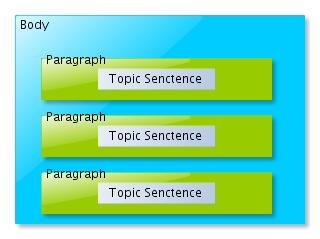
The first thing to understand about an outline is that it has a structure. It has structures on multiple levels. The first is the topmost or highest level. At this level an outline consists of 3 components.


  1. An Introduction - Normally introduces the reader to the document. Provides a basic description of the purpose and goals of the rest of the outline.
  2. A Body - Where all the main information is located, sorted and presented. In a paper or article it consists of paragraphs where each paragraph is centered around an idea or information or a collection of them.
  3. A Closing / Ending - This summarizes the document. It should re-state to a degree the purpose of the document and it's goals and how the document has achieved that. If the document is long, it should also summarize or restate key points.
The main area is of course, the body. This is the next level. The body consists of points. A point is a sentence that should state the idea in it's most simplest, straight-forward form. It can also summarize or state the topic of the information that will be elaborated on later. The elaboration can be done in the final paragraph or in sub-points. This means that points can be hierarchical or that a point can have sub-points. This is yet another level. These sub-points are points themselves and can have sub-points too. And so on and so forth.
Take a look at this simple example

  1. Introduction - Why my car won't start
  2. Body
    1. Symptom
      1. Turn the key and there is only a click-click-click sound
    2. Likley causes
      1. Battery is dead
      2. Problem with starter
  3. Closing - I need to narrow down the cause before going to the mechanic

Item '2.1 Symptom' is the topic while Item 2.1.1 is the elaboration. The sentence in item '2.2.1 Battery is dead' states the idea very simply and is a sub-point to item '2.2 Likely Causes'. Normally, there is no need to state item '2. Body' but I put it there as an guide.

When writing, these points will become a topic sentence. A paragraph is built around the topic sentence. As was pointed out earlier, the paragraphs will form the body. 

Lies, Damn Lies and Statistics 2

Continued from Lies, Damn Lies and Statistics
One rule to always remember is "Just because is sounds true, doesn't mean it's true". If choosing a solution mean relying on statistics, keep the statistics simple. A statistic that is in a simple sentence can be analysed much quicker than if we were to question it's validity by involving the data. For example: If  that statement is "The device fails after an average of 14 months", it could be broken down into
  1. What does a failure mean? A problem that result in a replacement or device stops functioning requiring manual restart?
  2. Who did the test? The manufacturer or real-world experience by the person making the claim
  3. How long does it take to replace or fix? How long is the downtime? This takes a look at the affect of the statistics instead of the statistics itself. By assessing the statistics effect on choosing the solution, we can figure out how important it is and how important it be true. 

Lies, Damn Lies and Statistics

The phrase used above was first popularized by Mark Twain. It questions the use of statistics by questioning it's validity. Especially when it supports an argument that seems weak. 
It is damning because people put a degree of faith in statistics. The reason for this is because statistics are factual in nature. The way the figures are presented appears to be cold facts as opposed to opinions. At best, we see statistics as representing and reporting on data that have been processed by more knowledgeable people, therefore more trustworthy. But if examine closely this relationship, there lies the flaw. When we trust statistics, we are really trusting the people who came up with them. But doesn't that mean when someone is quoting statistics, its really hearsay? Ouch.
Basically yes. Don't assume hearsay is bad although the word is usually used negatively in courts. There are ways to figure out if statistics quoted to us really mean what they say. It involves asking hard questions like:

Teaming Up To Win 2

Continued from Teaming Up To Win.
A sports team has a very clear structure. Each team member knows what they have do. Each of them have both specific and general tasks. General tasks are jobs that are common to all members. Like to stop the members of the other team from crossing the field in football. At the same time they each can have specific tasks. A team member has to block a specific guy or run the interception pattern. All of these actions together form teamwork.
A sign of a winning team is when these tasks are clearly defined by the Coach. A good Team Captain knows not only his tasks but also those of all his team members. This information is crucial if he has to call an audible or make changes on the field to respond to some thing he sees happening in the game.
Each team member doing their job well is half the job done. What makes the whole more than the sum of its parts is how each member interacts and communicates with each other. Both of these are reliant on each other.

Do Not Lose Focus of the Result

Maybe you think your problem is not worth solving. You've tried hard to find a solution. You've had problems defining the criteria that will make the solution. You've asked hard questions and only got more questions. You knew the road would be long and hard. But you never expected it to be this hard. Right about now, giving up would be a relief.
Please stay focused. You may be closer to the solution than you think. In the meantime, try focusing on the rewards and gains that is yours once the problem is solved. Think about all the things you will be able to do once this problem is solved. Imagine your success. Remember the last time you were successful at anything. Did you think your odds then were unsurmountable too? Despite that, you still found success.You still made it work. You found a way. Take yourself back to that time and remember how it felt. Now imagine you solving this problem and feeling the same thing. Is that a feeling you want? The joy and exuberance of success. It is within your grasp. Take this opportunity. You deserve it.

Own the Solution

Ownership is a tacky issue with problems. When a problem does occur, ownership gets tossed around. The assumption is that whomever owns the problem, has to solve it. This wastes precious time which could have been used to begin to solve the problem. It increases anxiety among people who are targeted and can create a general feeling of restlessness, waiting for the other shoe to drop.
If it is clear that the you or your group is responsible to solve a particular problem, perhaps it should viewed differently. It shouldn't be viewed as a burden or obstacle. Rather than focus on the problem, focus on owning the solution. That is what problem solving is really about. You are responsible for beginning the process of solving the problem. You will find a solution that is a fit for your problem. You are probably solving the problem right now simply by taking ownership and moving the process towards a solution..
Look past the problem and focus on the solution. Be proud of owning the solution and don't let anyone take that away from you.